Frequently Asked Questions
What is Willamette Falls Trust?
The Trust is a non-profit, Tribal-led organization formed in 2015 and working for meaningful public access to Willamette Falls. The Trust is led by board members who are engaged in their communities, including appointed delegates from four Tribal governments. We have invited and welcome other Tribes with ties to the Falls to participate on our Board and Tribal Leadership Committee.
Our current focus is on raising awareness, fundraising, acquisition, restoration of the landscape and renewing Oregonians’ connections to this sacred and stunning site. Our goal is to ensure that Willamette Falls is accessible to everyone.
Who are the four Member Tribes?
The Trust’s Board of Directors includes appointed representatives of four Member Tribes with extensive ties to the Falls: Confederated Tribes and Bands of the Yakama Nation, Confederated Tribes of Siletz Indians, Confederated Tribes of the Umatilla Indian Reservation, and Confederated Tribes of Warm Springs Reservation of Oregon.
What’s the status of the project?
We are entering an exciting new phase, with growing recognition and investment in the project. Tribal leaders, local and state officials, and private philanthropists all recognize the importance of protecting this natural landscape and have made significant investments in meaningful public access for all. As of November 2025, the State of Oregon has allocated $45 million and private philanthropists have committed $31 million toward securing public access to Willamette Falls.
How much will this project cost?
The total cost will be informed by ongoing assessments and following an extensive period of Tribal consultation and community engagement. Because Willamette Falls is a place where multiple histories converge, collaboration is critical. The members of our board are engaged in their communities, including appointed delegates from four Tribal Nations. Representatives for the Trust are also reaching out to other communities of interest. In determining the full scope of the project, the Trust is committed to hearing from all.
What is the timeline?
Additional on-the-ground assessments and extensive community engagement will be required to determine the timeline. Our goal is to create meaningful public access within 10 years.
Exactly where is the location of the Inter-Tribal Public Access Project?
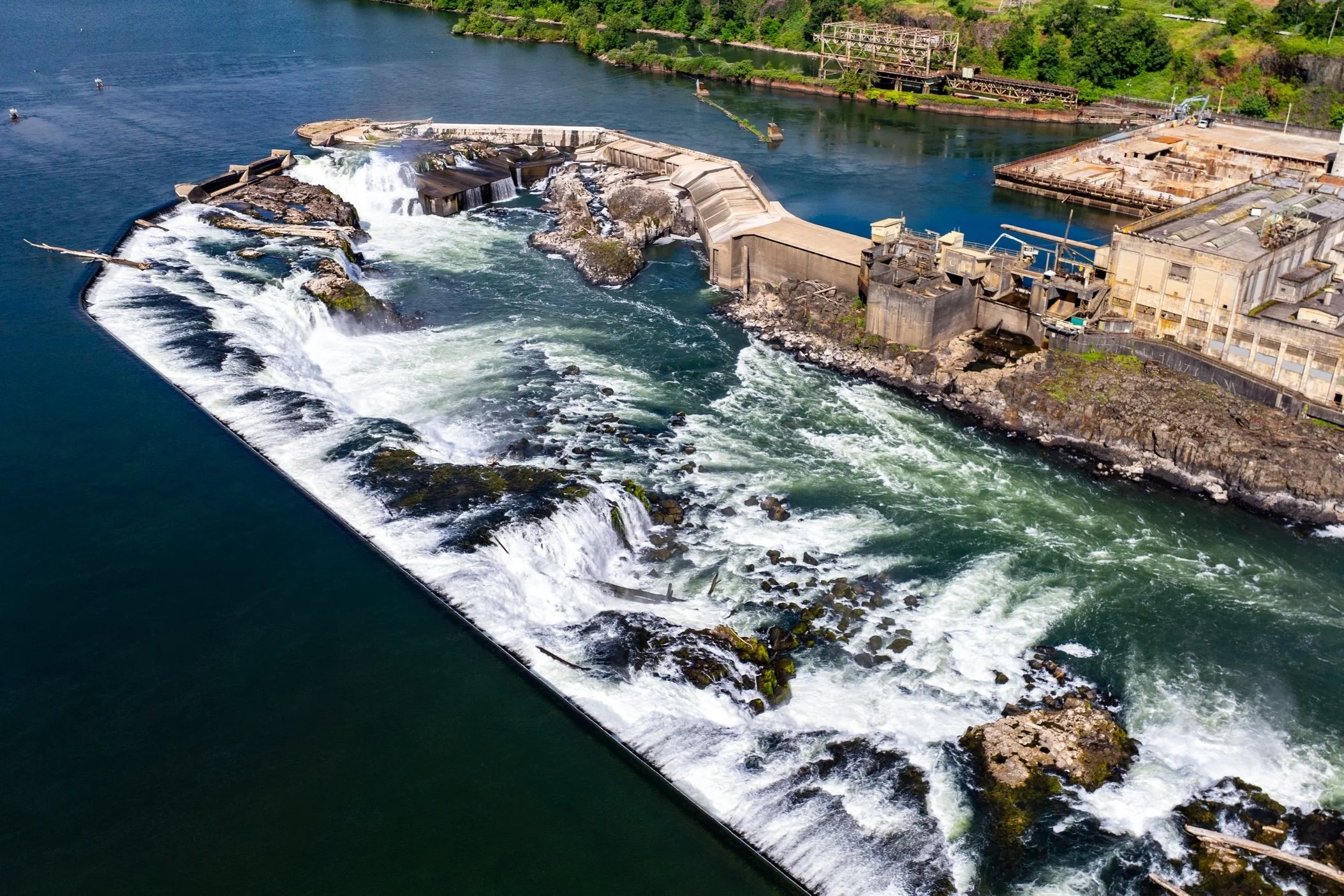
The site covers more than 40 acres on Moore’s Island and uplands on the West Linn side of the river, including the property where a paper mill operated until its closure at the end of 2024. It does not include PGE’s hydroelectric dam which will continue to operate in perpetuity.
How does this connect with the project on the other side of the river? Blue Heron site?
The Trust is not involved in the development of tumwata village in Oregon City, which is being built on land that once housed the Blue Heron paper mill. The Trust is proud to support the many transformative projects working to reimagine and heal the Willamette River including tumwata village, the Willamette Falls Locks Authority, Albina Vision Trust and others.
Will this be a state/national park?
The Trust believes the Falls should be protected by and for those who care deeply for this sacred and iconic landscape, and would welcome the awarding and recognition of a state, national, or even global designation.
The site is home to the first-long distance transmission of DC electricity in the country which occurred on June 3, 1889, when power flowed from the Willamette Falls powerhouse in Oregon City, Oregon, to light the streets of downtown Portland, a distance of approximately 14 miles, putting the region on the economic map.
The Falls have enormous historical, cultural and environmental significance. Many Tribal Nations have creation stories centered around the Willamette River and the Falls, and petroglyphs dotting the landscape date between 7,000 and 12,000 years before present.